
Call: 08071724657
 Send Inquiry

 Send Inquiry
Instrumentation Cable
Price 300.0 INR/ Meter
Instrumentation Cable Specification
- Temperature
- -30C to 105C
- Conductor Type
- Stranded and Flexible
- Cable Length
- Custom on request
- No Of Core
- 2 to 61 cores
- Connector Type
- Open End / Terminal Lugs optional
- Product Type
- Instrumentation Cable
- Material
- Copper, PVC, XLPE
- Function
- Signal transmission and control
- Usage
- Process control, industrial automation, communication systems
- Voltage Surge
- Up to 1100V
- Frequency (MHz)
- Up to 50 MHz
- Rated Voltage
- 300/500V
- Rated Current
- As per conductor size
- Cable Capacity
- Depends on core and conductor size
- Insulation Material
- PVC, XLPE
- Conductor Material
- Annealed Tinned Copper
- Length
- Available in 100m, 200m, 500m, and custom lengths
- Size
- Varies (0.5 sqmm to 2.5 sqmm per core)
- Color
- Blue outer sheath / Multi-color cores
- Diameter
- Varies with specification
- Application
- DCS, PLC Panel, Analog and Digital Signals
- Armour Type
- Galvanized Steel Wire or Strip
- Outer Sheath
- Flame Retardant PVC / FRLS / LSZH
- UV Resistant
- Available as option
- Spark Test Voltage
- 6 kV AC
- Moisture Resistance
- Yes
- Fire Performance
- Flame Retardant and Fire Retardant Low Smoke options available
- Screen Coverage
- 80% coverage minimum
- Oil Resistance
- Available for specific specifications
- Core Identification
- Numbering or Colour-coded as per IS/IEC
- Shielding
- Overall and/or individual aluminum polyester tape
- Inner Sheath
- Extruded PVC / PE
- Min. Bending Radius
- 10 x outer diameter
Instrumentation Cable Trade Information
- Minimum Order Quantity
- 100 Meter
- Delivery Time
- 1 Week
About Instrumentation Cable
(We offer [INSTRUMENTATION CABLE] in multiple types/variants to suit different requirements. .) Solid / Stranded / Flexible Copper Conductor, PE / XLPE / PVC / XLPO / EPR / Silicone Rubber insulated, Pair / Triad / Quad, Individually / Overall Aluminium Mylar + Drain wire / Copper wire braid / Copper Taped, PE / PVC (HR / FR / FRLS) / Rubber / LSOH Inner Sheathed, Unarmoured / GI Armoured, PE / HDPE/ PVC (HR / FR / FRLS) / LSOH / Rubber Outer Sheathed Instrumentation cables generally conforming to IS 1554 / 7098 Pt-1 / BS EN 50288-7. Above cables can be supplied with Lead Alloy / Polyamide Metallic Barrier Sheath wherever required.Comprehensive Shielding and Protection
The cable's advanced shielding-using overall and/or individual aluminum polyester tape-ensures a minimum of 80% coverage, safeguarding signal integrity against electromagnetic and radio-frequency interference. This feature is crucial for precise signal transmission in noisy industrial environments, reducing errors and enhancing reliability.
Durable Construction for Industrial Demands
Built with galvanized steel wire or strip armor, these cables withstand mechanical stress during installation or operation. The flame retardant, fire retardant low smoke (FRLS/LSZH) outer sheath meets stringent safety standards, making the cable suitable for a wide range of process control and automation applications.
Flexible Application and Installation Options
With stranded and flexible tinned copper conductors, multiple core and insulation options, and custom lengths available, this instrumentation cable adapts to diverse industrial requirements. The minimum bending radius of 10 times the outer diameter ensures easy routing, while options for UV resistance, oil resistance, and open end or terminal lug connectors provide tailored solutions.
FAQ's of Instrumentation Cable:
Q: How does the aluminum polyester tape shielding benefit instrumentation cables?
A: The aluminum polyester tape shielding, whether overall or individual, offers strong protection from electromagnetic interference, ensuring signal integrity in environments with electrical noise. This minimizes errors in data transmission, which is critical for control and automation systems.Q: What is the process for installing this cable in industrial settings?
A: Installation involves laying the cable with a minimum bending radius of 10 times its outer diameter to avoid damage. It can be armored with galvanized steel wire or strip for mechanical protection, and custom lengths or connector options provide flexibility during installation for process control or communication systems.Q: Where can these instrumentation cables be used effectively?
A: These cables are ideal for process control, industrial automation, DCS, and PLC panels, as well as analog and digital signal transmission. Their flame retardant and moisture-resistant design ensures reliable performance in harsh industrial or outdoor environments, especially when UV and oil resistance are specified.Q: What are the usage benefits of having a flame retardant or LSZH outer sheath?
A: Using a flame retardant (FRLS or LSZH) outer sheath ensures enhanced fire safety by minimizing flame propagation and reducing toxic smoke generation. This is particularly important in enclosed or safety-critical industrial environments where occupant protection and equipment safety are paramount.Q: When should UV and oil-resistant features be specified for this cable?
A: UV resistance should be specified when the cable will be exposed to direct sunlight or outdoor conditions, while oil resistance is recommended for industrial settings with potential exposure to oils or lubricants. These options increase cable longevity and operational reliability.Q: How does conductor material affect the cable's performance?
A: The annealed tinned copper, stranded and flexible conductors provide excellent conductivity, flexibility, and resistance to corrosion. This ensures reliable signal transmission and ease of installation in complex routing scenarios, supporting both short and long-distance communication needs.Q: What warranty coverage is provided with these instrumentation cables?
A: The instrumentation cable comes with a one-year warranty, ensuring product quality and performance. For specific warranty terms, consult with the supplier or distributor based on application requirements.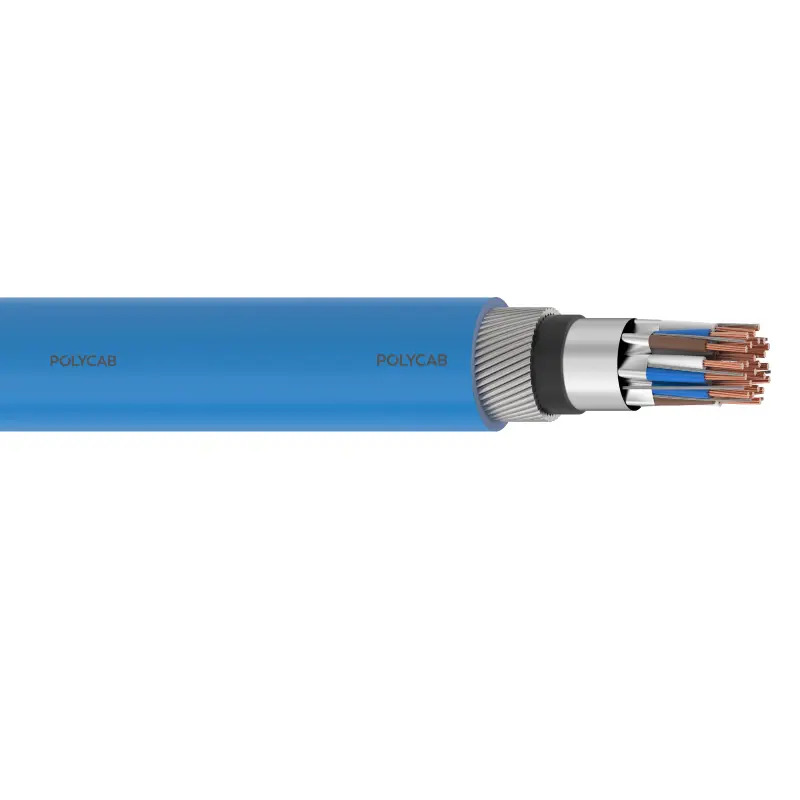
Tell us about your requirement

Price:
Quantity
Select Unit
- 50
- 100
- 200
- 250
- 500
- 1000+
Additional detail
Mobile number
Email

More Products in Wire Cable Special Wire & Cable Category
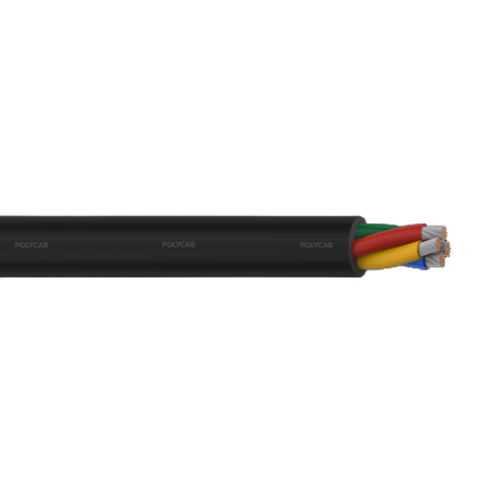
Polycab RR-P 1100V AC IS 9968-1
Minimum Order Quantity : 50
Cable Length : Standard and Custom Lengths Available
Length : Custom Lengths Available
Rated Current : As per IS 99681 standard
Cable Capacity : Depends on Size and No Of Core
Color : Black Outer Sheath, Multicolor Inner Cores
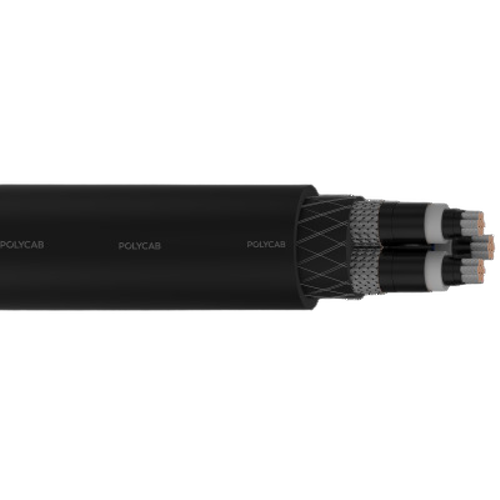
Polycab MV Cu IS 9968-2 6.35-11(E) or 6.6-6.6(UE)kV
Minimum Order Quantity : 50
Cable Length : Custom lengths available
Length : Available in standard and customized lengths
Rated Current : Dependent on size and installation conditions
Cable Capacity : As per IS 99682 standards
Color : Black outer sheath
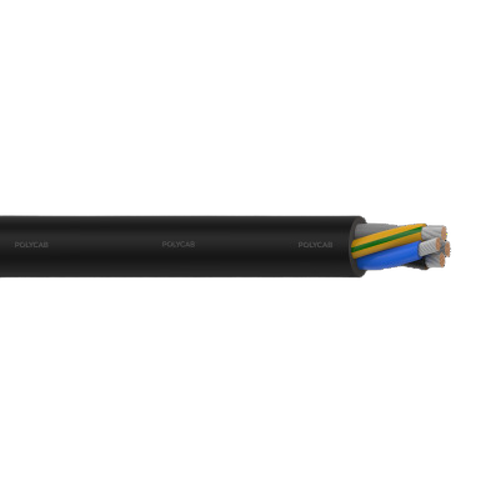
Polycab H07BB-F BSEN 50525-2-21 MC 450-750V AC
Minimum Order Quantity : 50
Cable Length : Customizable (commonly supplied in 100m rolls)
Length : Available in 100M, 200M, custom lengths on request
Rated Current : Depends on core size; typically up to 65A (at 1.5mm2 to 16mm2)
Cable Capacity : Varies by core size (multicore options available)
Color : Black (Sheath), multicolour cores
Polycab Telephone Cable
Minimum Order Quantity : 1 Meter
Cable Length : Standard or customized
Length : Available in 100m, 200m, and custom lengths
Rated Current : As per standard telephone communication requirements
Cable Capacity : Standard pairs (2, 4, 10, 20, 50, 100 as per requirement)
Color : Twisted pairs in multiple colors for easy identification

Contact Details
SHREEJI ELECTRO POWER PRIVATE LIMITED
GST : 24ABFCS6162A1ZO
- Plot No 308/5/a, Near Lucky Restaurant, Opp. Telephone Exchange Makarpura, Gidc,Vadodara - 390010, Gujarat, India
- Phone :08071724657
 Send Inquiry

Developed and Managed by Infocom Network Private Limited.
